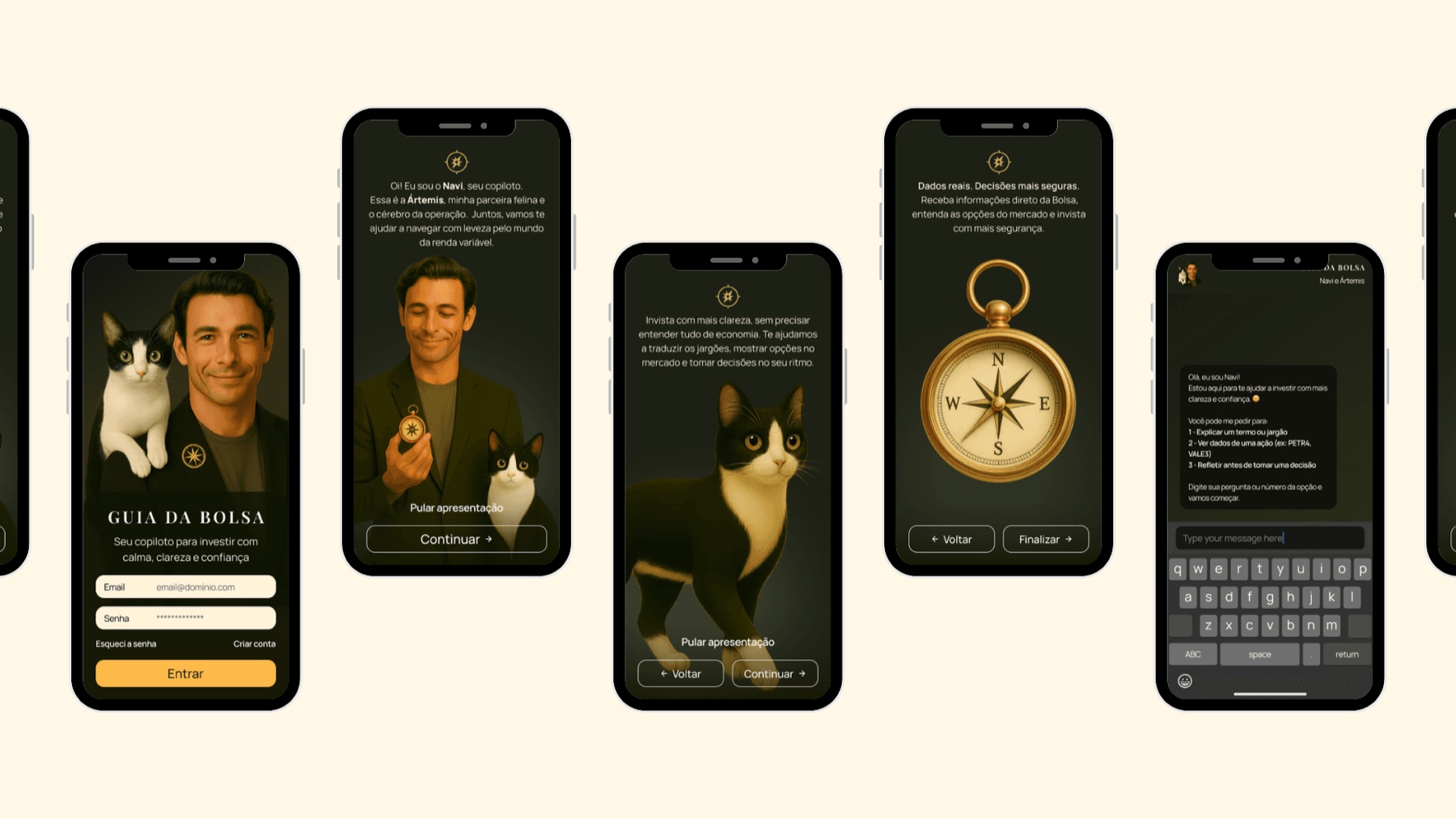
What research showed
I read 32 public studies on retail investors to check whether the pattern held beyond one platform. It did. Three barriers kept coming back, and all of them had to do with feelings or knowledge.
of retail investors name fear of losing money as their main barrier (eToro, 2025).
of people don't understand investment fees (TenCap, 2024).
abandon financial app onboarding halfway through (Signicat, 2022).
Access was already there, and people still didn't feel ready. So I designed a mentor that makes the first steps feel safe.
Key decisions
- 01A mentor that never recommends
Fear was the main barrier in research, and in a regulated market an assistant that only educates earns more trust. So the mentor explains concepts and scenarios and suggests the next question, but never says what to buy or sell.
- Gave up
- Direct buy or sell recommendations.
- Got
- Trust, with every decision left to the person.
- 02It starts with how you feel
43% of retail investors name fear of losing money as their main barrier. That's why the first question is how you feel about investing, the language puts no pressure, and information comes in small steps.
- 03Two characters
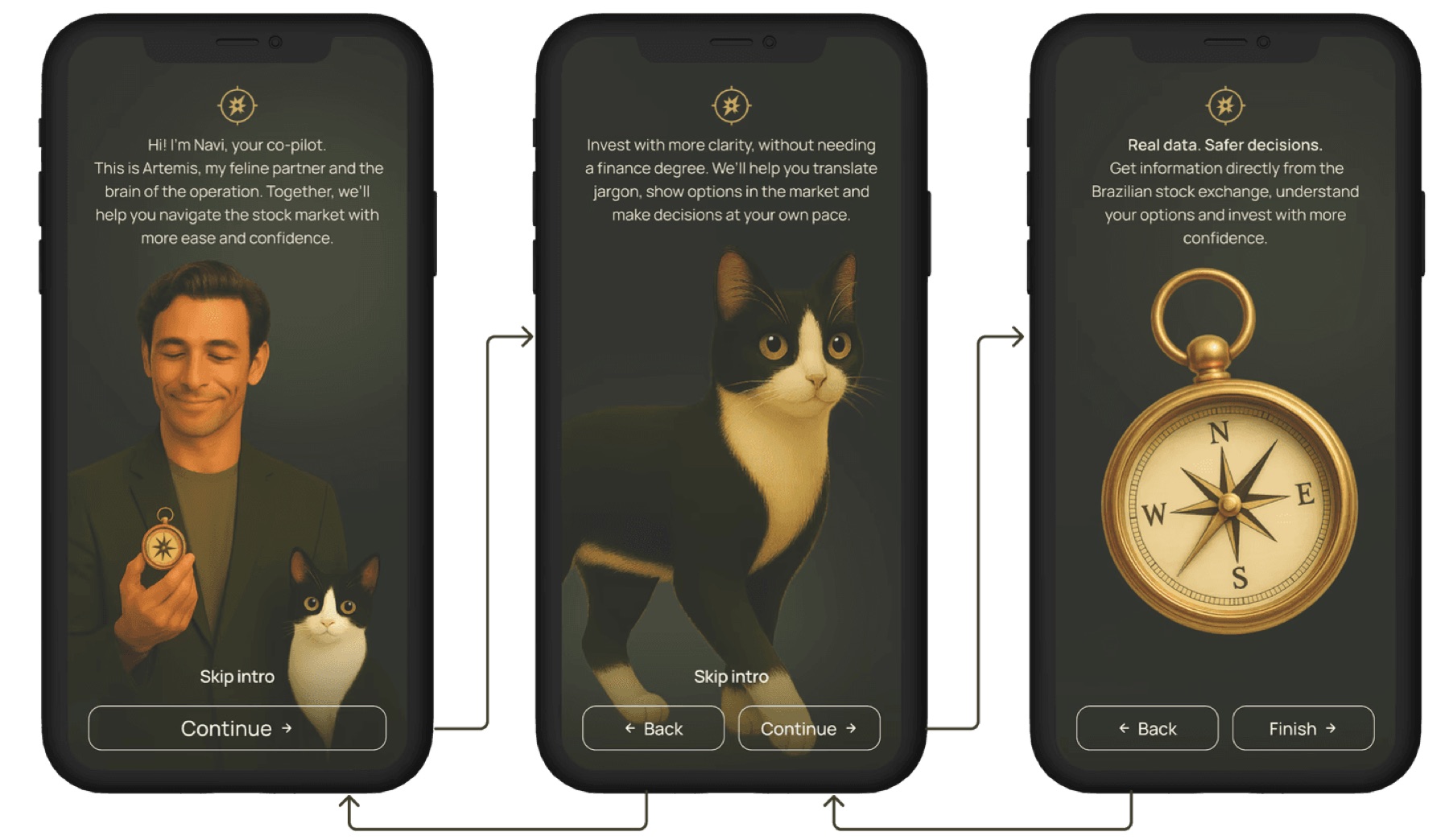
Navi leads the explanations. Meanwhile Artemis, inspired by my own cat, notices hesitation and celebrates small wins, so beginners feel accompanied while they learn.
- 04Every pattern traces to research
When to ask a follow-up, slow down or show a disclaimer came from studies on fear, drop-off and trust. As a result, every choice targeted a known problem.
- Gave up
- Nice-to-have features.
- Got
- Focus on the confidence gap, and fast decisions in 48 hours.
How the mentor evolved
I tested it the way a real beginner talks, changing direction mid-conversation and asking follow-ups like “and what if I changed my goal?”. Each failure became a design rule for the next version.
- V1One generalist agent
One agent answered every message, with no routing and no memory.
- Got
- Good answers to clean, one-off questions.
- Limit
- It only remembered one message at a time, so the context got lost.
- V2Specialized agents
To fix that, I split it into instruction, decision and clarity agents, picked by keyword.
- Got
- Better answers than one generalist agent.
- Limit
- Without the expected keywords, people hit a generic error.
- V3Router and memory
Then I added intent detection and short-term memory of goals, amounts and doubts.
- Got
- Follow-ups connected back to the original plan.
- Limit
- It still missed edge cases and emotional nuance, with no clear line on what it could say.
- V4Safety locks
Finally, safety prompts blocked direct investment recommendations, while disclaimers explained risk and length limits kept each answer short.
- Got
- Plain answers that explain risk and leave every decision with the person.
- Limit
- Real investors and compliance teams haven't tested it yet.
Without structure and memory, a powerful model behaves like a static FAQ.
What I learned
The result is a working prototype, built in 48 hours. The next step is testing it with real investors and compliance teams.
In a conversational product, the dialogue is most of the design. Every line is a product decision, so I planned the empathy from the first message.
Guardrails can be part of the value. In a regulated market, an assistant that only educates earns more trust.
Knowing the backend widened my toolkit. Wiring agents, live market data and memory let me invent patterns like contextual follow-ups.
Try the prototype
Talk to Navi in your own words. Ask what a word means, look up a stock, or share a goal and then change your mind.